Treating even the smallest, easily overlooked veins to prevent recurrence Specialized Small Vein Treatment
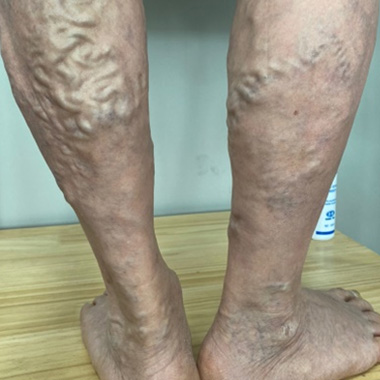
Varicose veins that develop because tiny veins were left untreated. Small Vein Varicose Veins
Small vein varicose veins refer to varicose veins that develop when only the large veins in the legs are examined and treated, leaving reflux in the smaller veins unaddressed.
Varicose veins occur when the valves inside the leg veins become damaged, causing blood to flow backward and disrupting normal circulation. Because this is a vascular condition, varicose veins can develop in any of the veins in the legs.
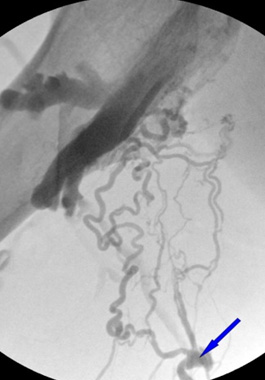
Unlike the major veins such as the great saphenous or small saphenous veins, small vein varicose veins occur in tiny branch veins where valve dysfunction causes reflux. These small veins are much smaller and more numerous than the main veins, so reflux in them is often overlooked during examination.
CAUSE OF DISEASE
Cause of Disease
Small vein varicose veins occur when only the major veins are examined.
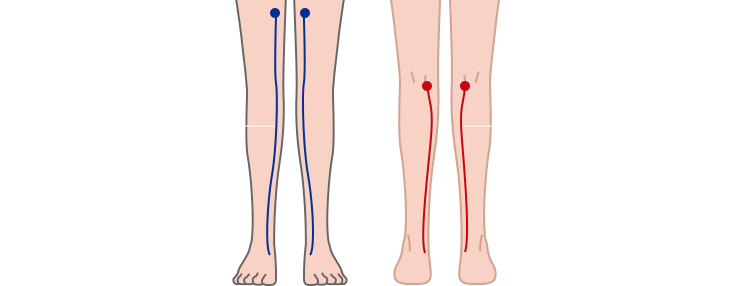
There are countless veins in the legs, which can be broadly categorized into deep veins, saphenous veins, and small veins. Among the saphenous veins, the great saphenous vein runs from the groin down to the inner ankle, while the small saphenous vein extends from behind the knee down to the outer ankle. These saphenous veins are the main superficial veins of the leg and are considered major vein trunks. Thus, most hospitals examine and treat only the saphenous veins.
However, reflux can also occur in the small veins. Because these small veins are tiny branch vessels, their diameter is smaller and the amount of reflux is less than in the saphenous veins. Still, poor circulation in these veins clearly indicates venous insufficiency, and symptoms of varicose veins appear just the same. Over time, the increased strain on surrounding veins can cause additional damage, leading to further vascular problems.
Examination and treatment limited to the great and small saphenous veins
Persistent reflux in small veins
Development of small vein varicose veins
SYMPTOM
Symptoms
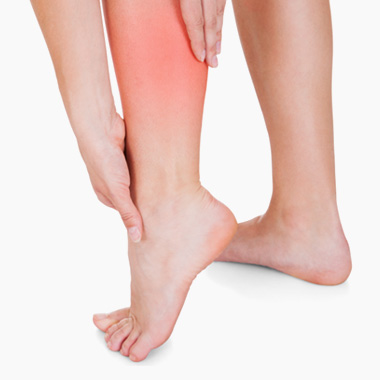
After varicose vein treatment, symptoms may initially improve, but over time, they can reappear. Small vein varicose veins often cause symptoms in areas other than the legs. They commonly occur in the lower back or around the knees, and in women, symptoms may also appear in the pelvic area. Examples include a feeling of weakness in the knees or pain and coldness on the outer side of the hips.
FEATURE
Characteristics of Small Vein Varicose Veins
Recurring varicose vein symptoms may not always mean a recurrence of varicose veins.
It is necessary to identify the specific problematic veins among countless small branch veins, which makes detecting small vein varicose veins difficult. For this reason, many cases are treated by addressing only the saphenous vein varicose veins, while small vein varicose veins remain undetected. Treating the larger veins with greater reflux often brings immediate symptom relief, but over time, the symptoms of small vein varicose veins begin to appear.
As a result, many patients assume that their varicose veins have recurred due to incomplete treatment and focus only on whether the previously treated veins have developed new problems. If an examination shows no reflux in the great or small saphenous veins despite ongoing symptoms, small vein varicose veins should be suspected.
CHECK
Check Yourself for Small Vein Varicose Veins
I feel pain in my pelvis and coldness on the outer side of my hips.
My knees ache and it is difficult to walk.
I feel unusual pain or discomfort in my lower back or pelvis rather than in my legs.
I received varicose vein treatment not long ago, but the symptoms have returned.
Although my symptoms match those of varicose veins, test results show no reflux.
CAUTION
Precautions for Small Vein Varicose Veins
Each invisible vein is carefully examined to ensure that no affected veins are overlooked.
Even if the saphenous veins are treated, varicose vein symptoms may return if reflux remains in the small veins. Initially, symptoms improve as reflux in the major veins is blocked, but over time, reflux in the small veins worsens, and the symptoms reappear. If small vein varicose veins are not detected in time, they can overload the valves of other veins, leading to varicose veins in multiple areas. For this reason, varicose vein examinations must include not only the great and small saphenous veins but also the small veins.
At Sun Vascular Clinic, we examine the small veins based on the patient’s symptoms, in addition to assessing the great and small saphenous veins. To explain further, after evaluating the great and small saphenous veins, we carefully examine the small veins branching from them. Depending on the patient’s symptoms, we check specific small veins. For example, if there is a cold sensation on the outer calf, we examine all small veins in that area to identify and treat the affected vein precisely.
EFFECT
Treatment Results for Small Vein Varicose Veins
At Sun Vascular Clinic, every varicose vein procedure involves a detailed examination and treatment of both the major and minor veins. From the very first step of diagnosis, each vein is carefully examined to ensure that no affected vein is missed. This thorough approach provides the foundation for freeing patients from varicose vein symptoms. By completely sealing the defective veins, we restore smooth blood flow and enhance the overall quality of treatment. Through a step-by-step process from examination to treatment, we help patients achieve complete relief from the pain and discomfort caused by varicose veins.
TREATMENT
Stage-Based Treatment for Varicose Veins
Stage
Early Stage
Mid Stage
Late Stage
Characteristics
Light purple spider veins, small veins less than 1 mm becoming visible, and changes in skin tone
Beginning of vein protrusion
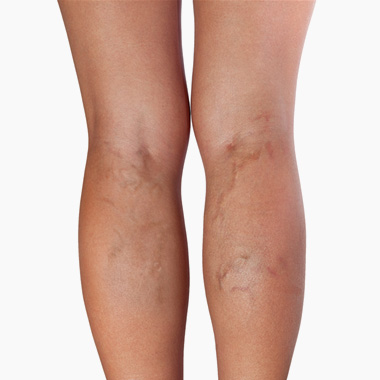
Veins larger than 1 mm bulging, twisting, or darkening, pigmentation, and thrombosis
Symptoms
Heaviness, easy fatigue, mild swelling
Tingling or swelling that worsens in the afternoon, leg cramps during sleep, cold sensations, burning in the soles of the feet
Itching or crawling sensations, various and complex symptoms, worsening of existing symptoms, skin ulcers
* Symptoms may vary and may appear in a mix of early, mid, and late stages depending on the progression of the disease.
Medication / Injection Treatment
Medication Treatment
This treatment is performed when varicose veins are detected at an early stage. It is used to prevent the progression of varicose veins or to relieve symptoms.
Sclerotherapy
This procedure involves injecting medication into the vein to close off the affected vessel. It is a simple treatment suitable for patients whose symptoms are not severe.
Procedures / Surgeries
VenaSeal (Horizontal Valve Sealing)
VenaSeal is a treatment that injects medical adhesive into the vein to improve symptoms of varicose veins. In cases of saphenous vein reflux, the junction between the saphenous vein and the deep vein is sealed horizontally and closely to form an angle near zero degrees, preventing recurrence.
Water Tunnel Laser
This treatment closes the vein using high-energy heat of 500-1000°C generated by the laser. It uses a diffused laser for safety, and the surrounding tissue is protected by a water tunnel that minimizes heat damage. The latest 1940 nm laser achieves an excellent closure rate with less thermal energy compared to older models, providing a safer treatment option.
ClariVein
This method uses a rotating-blade catheter to mechanically stimulate the inner wall of the vein, followed by an injection of a sclerosing agent. There is no heat damage or heat-related side effect.
Mild Radiofrequency Treatment
This procedure closes refluxing veins using heat energy of 100-120°C generated at the tip of a radiofrequency catheter. Like the laser method, it applies the water tunnel technique to maximize safety.
Vein Stripping Surgery
This traditional method is performed under local or general anesthesia. It involves making a small incision in the skin, tying off the refluxing vein, and removing it from the body. It may also be performed in combination with laser treatment.