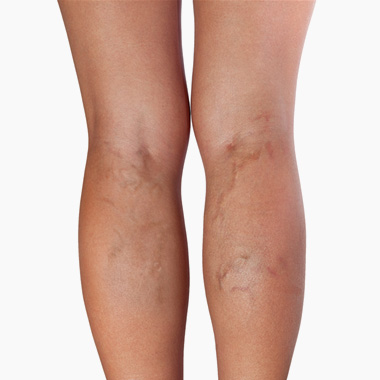
Even when symptoms seem similar, not all varicose veins are the same.
Specialized Treatment for Every Type of Varicose Vein

Your last golden opportunity to treat varicose veins.
Advanced Varicose Veins

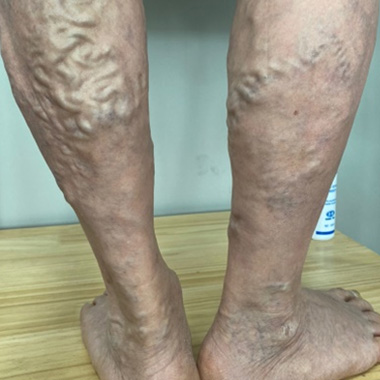
Advanced varicose veins refer to cases that have been left untreated for a long time without proper care.

Varicose veins occur when blood in the leg veins fails to flow back to the heart and instead refluxes downward. Because this is a progressive condition, symptoms can continue to worsen if appropriate treatment is not provided. “Advanced varicose veins” describes the stage in which the condition has been neglected for an extended period without treatment. As the reflux of blood continues over time, the prolonged pressure and increased volume of backflow place stress on the veins, leading to a higher risk of vein deformation. In such cases, the veins may protrude severely on the surface, appearing like grapevines along the leg. Blood clots can also form inside the enlarged and distorted veins. Even when the veins are not visible, patients may experience various and complex symptoms, including numbness, coldness, heaviness, itching, crawling sensations, and in severe cases, skin ulcers.

CAUSE OF DISEASE

Cause of Disease

Advanced varicose veins are caused by neglected valve dysfunction in the leg veins

Varicose veins develop due to valve dysfunction within the leg veins. These venous valves act as gates that prevent blood from flowing backward as it travels up toward the heart. When valve function weakens for various reasons, blood continues to flow downward, creating a vicious cycle that places additional strain on both the veins and the valves. Factors that reduce the function of veins and valves include heredity, aging, gender, pregnancy, occupation, lack of exercise, and secondary varicose veins.
  • Decreased valve function caused by various factors

  • Ongoing blood reflux increases valve strain and creates a vicious cycle

  • Advanced varicose veins

SYMPTOM

Symptoms

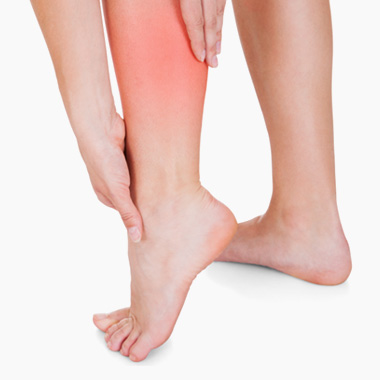
The longer varicose veins remain untreated, the more complex the symptoms become. In addition to the common symptoms of leg numbness and pain, other abnormal signs may appear. Particular attention should be paid to vein deformities and changes in leg sensation. As time passes, the veins gradually narrow and twist, eventually appearing like grapevines along the leg. In some cases, the veins may protrude without causing pain. This can be a warning sign that the veins are quietly being damaged from within. If symptoms originate from the deep veins, careful evaluation is needed. Even when the veins are not severely bulging, you may experience itching or crawling sensations in your legs. As symptoms worsen, skin lesions or ulcers may develop. In advanced cases, blood clots are also more likely to form. These clots can travel through the bloodstream and block vessels in the heart or brain, increasing the risk of conditions such as myocardial infarction or stroke.

FEATURE

Characteristics of Advanced Varicose Veins

Prompt treatment is needed before symptoms become more severe as varicose veins do not stop progressing.

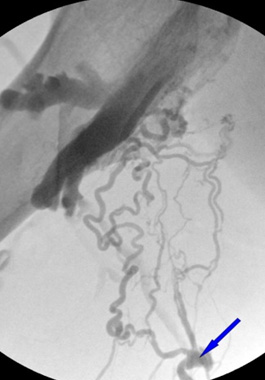
Because varicose veins are a progressive condition, symptoms continue to worsen the longer they are left untreated. In advanced varicose veins, the veins have been neglected for so long that they become narrowed and twisted, unlike normal veins. As a result, the path of blood reflux within the legs becomes more complicated, making treatment more challenging. In such cases, it is often difficult to use catheter-based procedures commonly performed for varicose veins, and more advanced treatment methods are required.

CHECK

Check Yourself for Advanced Varicose Veins

  • The veins on my legs protrude severely, appearing like grapevines on the skin.
  • I feel discomfort in my legs even though I do not see any veins on the skin.
  • When I stand or sit for a long time, my legs quickly start to feel numb.
  • My legs often feel itchy.
  • By evening, my legs are swollen and puffy.
  • I worry that my legs might hurt while I am sleeping.
CAUTION

Precautions for Advanced Varicose Veins

Although advanced varicose veins are not easy to treat, they are not impossible to cure.

Advanced varicose veins require a different treatment approach from early-stage varicose veins. Because the symptoms have persisted for a long time, a systematic treatment plan is essential to achieve full recovery and prevent recurrence. Conventional procedures such as laser treatment and VenaSeal involve inserting a catheter into the vein. However, in advanced varicose veins, the veins may have narrowed so much that inserting a catheter is difficult, requiring careful treatment selection.

At Sun Vascular Clinic, we perform hybrid treatments that combine the advantages of laser and VenaSeal procedures to overcome the limitations of conventional methods and effectively treat advanced varicose veins. Instead of relying on a single approach, we offer a range of treatment options, allowing patients to receive the most suitable therapy for their condition. With over 20 years of dedicated vascular experience, our medical team provides precise and individualized care, ensuring the most appropriate treatment even for complex or challenging cases.

EFFECT

Treatment Results for Advanced Varicose Veins

Patients with advanced varicose veins often feel anxious, wondering, “Can this really be treated?” because their symptoms have been severe and long-lasting. At Sun Vascular Clinic, we carefully treat each patient with a thorough diagnostic system and advanced, high-level treatment techniques, even in difficult cases of advanced varicose veins. With comprehensive treatment that targets the root cause of varicose veins, you can return to a comfortable daily life without worrying about recurrence. Our precise and high-quality care helps relieve leg swelling, numbness, and pain that have affected your daily life for years. At Sun Vascular Clinic, we are committed to helping our patients regain comfort and confidence in their everyday lives through clear and lasting treatment results.

TREATMENT

Stage-Based Treatment for Varicose Veins

Stage Early Stage Mid Stage Late Stage
Characteristics Light purple spider veins, small veins less than 1 mm becoming visible, and changes in skin tone Beginning of vein protrusion Veins larger than 1 mm bulging, twisting, or darkening, pigmentation, and thrombosis
Symptoms Heaviness, easy fatigue, mild swelling Tingling or swelling that worsens in the afternoon, leg cramps during sleep, cold sensations, burning in the soles of the feet Itching or crawling sensations, various and complex symptoms, worsening of existing symptoms, skin ulcers
Treatment Methods Medication, compression stockings, sclerotherapy VenaSeal (Horizontal Valve Sealing), Water Tunnel Laser, Mild Radiofrequency Treatment, ClariVein VenaSeal (Horizontal Valve Sealing), Water Tunnel Laser, Mild Radiofrequency Treatment, ClariVein

* Symptoms may vary and may appear in a mix of early, mid, and late stages depending on the progression of the disease.

Medication / Injection Treatment
Medication Treatment
This treatment is performed when varicose veins are detected at an early stage. It is used to prevent the progression of varicose veins or to relieve symptoms.
Sclerotherapy
This procedure involves injecting medication into the vein to close off the affected vessel. It is a simple treatment suitable for patients whose symptoms are not severe.
Procedures / Surgeries
VenaSeal
(Horizontal Valve Sealing)
VenaSeal is a treatment that injects medical adhesive into the vein to improve symptoms of varicose veins.
In cases of saphenous vein reflux, the junction between the saphenous vein and the deep vein is sealed horizontally and closely to form an angle near zero degrees, preventing recurrence.
Water Tunnel Laser
This treatment closes the vein using high-energy heat of 500-1000°C generated by the laser. It uses a diffused laser for safety, and the surrounding tissue is protected by a water tunnel that minimizes heat damage. The latest 1940 nm laser achieves an excellent closure rate with less thermal energy compared to older models, providing a safer treatment option.
ClariVein
This method uses a rotating-blade catheter to mechanically stimulate the inner wall of the vein, followed by an injection of a sclerosing agent. There is no heat damage or heat-related side effect.
Mild Radiofrequency Treatment
This procedure closes refluxing veins using heat energy of 100-120°C generated at the tip of a radiofrequency catheter. Like the laser method, it applies the water tunnel technique to maximize safety.
Vein Stripping Surgery
This traditional method is performed under local or general anesthesia. It involves making a small incision in the skin, tying off the refluxing vein, and removing it from the body. It may also be performed in combination with laser treatment.
TOP