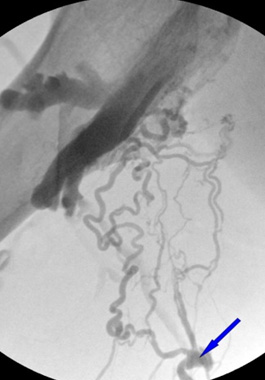
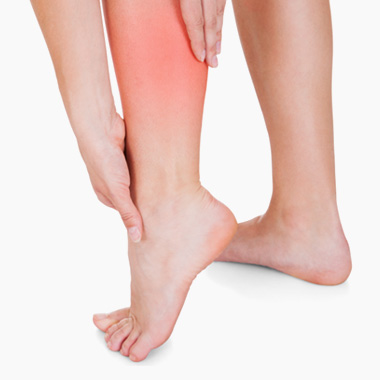
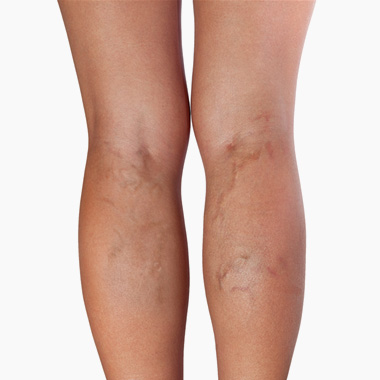
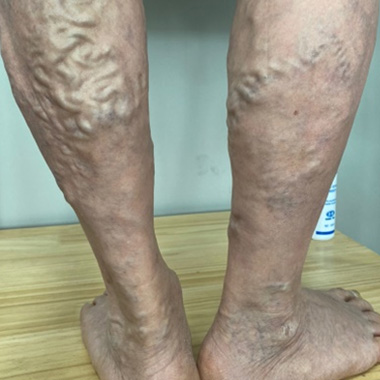
Even when symptoms seem similar, not all varicose veins are the same.
Specialized Treatment for Every Type of Varicose Vein

Symptoms appear in daily life but are not visible during examination.
Constricted Varicose Veins

Vasoconstricted varicose veins refer to a condition in which blood reflux is severe, but appears reduced when the veins are constricted.

In typical varicose veins, the valves inside the leg veins are damaged, causing blood to reflux and the veins to become enlarged. Normally, these valves help blood in the legs flow upward against gravity toward the heart. When the valves become damaged, blood can no longer move upward properly, increasing pressure in the veins and leading them to stretch.

In constricted varicose veins, the valve function is impaired, so symptoms such as numbness, heaviness, and coldness in the legs are often present. However, in certain tense or stressful situations, the veins constrict temporarily, and reflux appears reduced. This can occur during an examination for varicose veins, when nervousness causes the veins to constrict temporarily, leading to a mistaken diagnosis that treatment is unnecessary. For patients with constricted varicose veins, once the tension subsides, the veins return to their enlarged state, so it is important not to assume that the symptoms have improved.

CAUSE OF DISEASE

Cause of Disease

The cause of constricted varicose veins is external stimuli that trigger an overly sensitive nervous response.

Blood vessels serve as pathways that circulate blood throughout the body, repeatedly contracting and relaxing to protect the body’s internal balance. This process is mainly regulated by the autonomic nervous system, with vasoconstriction controlled by the sympathetic nerves. The sympathetic nerves, which branch out from the middle part of the spinal cord, cause the blood vessels to constrict when they are stimulated. Constricted varicose veins develop when stress, anxiety, or cold temperatures heighten the sensitivity of the sympathetic nervous response, leading to excessive constriction of the veins.
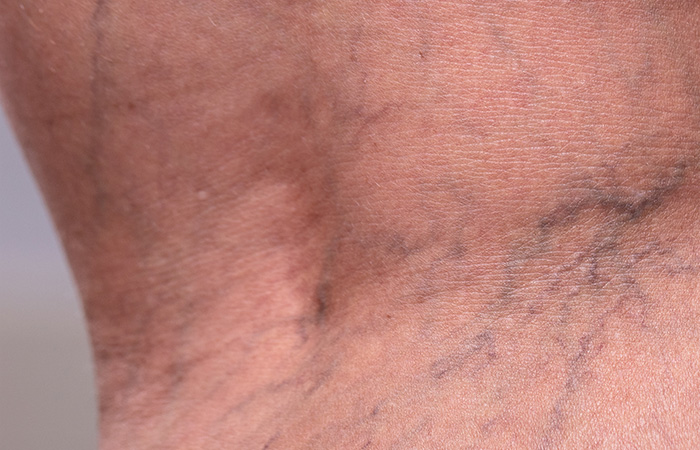
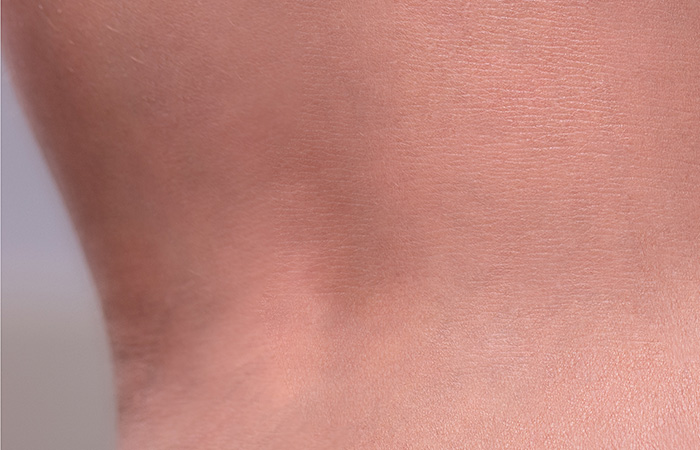
  • Valve dysfunction causes varicose veins

  • Stress and anxiety trigger sympathetic nerve stimulation

  • Development of constricted varicose veins

SYMPTOM

Symptoms

In everyday life, patients may experience common symptoms of varicose veins such as leg numbness, pain, and fatigue, but during an examination, they are often told that their symptoms are not caused by varicose veins. In addition to medical examinations, situations involving tension, stress, or cold temperatures may also temporarily relieve the symptoms, giving the impression that the condition has improved.

FEATURE

Characteristics of Constricted Varicose Veins

Varicose veins with symptoms that change depending on the situation, if left untreated without knowing the cause, they can lead to serious problems.
01

During Examination

Although the veins are dilated and blood reflux is usually severe, during a varicose vein examination, patients often feel intense tension or stress, which can temporarily suppress reflux symptoms. As a result, even though varicose veins are actually present, the reflux may not appear during the test, leading to a diagnosis that no varicose veins are found. This occurs because the veins react sensitively to emotional states such as stress or anxiety.

When tension or stress is high, the sympathetic nervous system of the autonomic nerves causes the veins to constrict.
As the veins temporarily constrict, the amount of reflux decreases, making it difficult to detect varicose veins during examination.

02

When the Weather Suddenly Turns Cold

Blood vessels are very sensitive to temperature changes and may constrict when the temperature drops. Naturally, varicose veins are also affected by changes in weather. When the weather becomes warmer, the veins relax, reflux becomes worse, and varicose vein symptoms may intensify. When the weather turns cold, the veins constrict to preserve body heat, and the amount of reflux temporarily decreases. This can give the false impression that the symptoms have improved. However, varicose veins do not improve on their own. They are a progressive condition that can slowly worsen even when there are no visible symptoms. It is important not to postpone an examination and to receive proper evaluation as soon as possible.

The risk of blood clots increases the longer constricted varicose veins go undetected.
  • Varicose veins are a circulatory disorder that can cause symptoms not only in the legs but also in areas such as the hips, pelvis, or lower back.
  • Even typical varicose veins are difficult to detect early because of their wide range of symptoms, but constricted varicose veins are even harder to identify since reflux is not visible during examination.
  • Because constricted varicose veins show a marked difference between dilation and constriction, blood clots can easily form. If diagnosis and treatment are delayed, these clots may lead to serious complications such as pulmonary embolism or stroke.
CAUTION

Precautions for Constricted Varicose Veins

The first and most important step toward successful treatment is a thorough examination.

Because constricted varicose veins are examined while the veins are contracted due to tension, the reflux may not appear, making it difficult to identify the affected veins. However, the longer varicose veins go undetected, the more the symptoms worsen, and the fewer treatment options remain. The procedures also become more complex, which is why early detection is key to effective treatment. To achieve this, the examination must be performed with sufficient time and care.

For patients, undergoing a varicose vein examination can be an anxious and stressful experience filled with thoughts such as, “What if I have varicose veins?” This tension can cause the veins to constrict and shrink temporarily. At Sun Vascular Clinic, we provide patients with enough time to relax before the examination so that testing can be performed accurately once they feel at ease. We also offer blankets and warm tea to help patients unwind, allowing us to observe the condition of the leg veins clearly and obtain precise examination results. During the examination, each vein is carefully assessed in detail to ensure that no affected veins are missed.

EFFECT

Treatment Results for Constricted Varicose Veins

At Sun Vascular Clinic, even the most hidden varicose veins are thoroughly examined over sufficient time, allowing us to identify and treat every affected vein without missing any. Patients with constricted varicose veins often experience worry, anxiety, and stress not only during examination but also throughout the treatment process. For this reason, treatment requires greater precision and care than for typical varicose vein cases.

At Sun Vascular Clinic, your doctor, Dr. Kim Seo-jeon, who has dedicated more than 20 years to vascular treatment, provides meticulous care to seal the affected veins completely and prevent recurrence, freeing patients from the pain of varicose veins. Even if other clinics have failed to detect constricted varicose veins, or if you continue to suffer from unexplained leg pain, we will never give up. We will identify the underlying vein problem and provide the appropriate treatment until recovery is achieved.

TREATMENT

Stage-Based Treatment for Varicose Veins

Stage Early Stage Mid Stage Late Stage
Characteristics Light purple spider veins, small veins less than 1 mm becoming visible, and changes in skin tone Beginning of vein protrusion Veins larger than 1 mm bulging, twisting, or darkening, pigmentation, and thrombosis
Symptoms Heaviness, easy fatigue, mild swelling Tingling or swelling that worsens in the afternoon, leg cramps during sleep, cold sensations, burning in the soles of the feet Itching or crawling sensations, various and complex symptoms, worsening of existing symptoms, skin ulcers
Treatment Methods Medication, compression stockings, sclerotherapy VenaSeal (Horizontal Valve Sealing), Water Tunnel Laser, Mild Radiofrequency Treatment, ClariVein VenaSeal (Horizontal Valve Sealing), Water Tunnel Laser, Mild Radiofrequency Treatment, ClariVein

* Symptoms may vary and may appear in a mix of early, mid, and late stages depending on the progression of the disease.

Medication / Injection Treatment
Medication Treatment
This treatment is performed when varicose veins are detected at an early stage. It is used to prevent the progression of varicose veins or to relieve symptoms.
Sclerotherapy
This procedure involves injecting medication into the vein to close off the affected vessel. It is a simple treatment suitable for patients whose symptoms are not severe.
Procedures / Surgeries
VenaSeal
(Horizontal Valve Sealing)
VenaSeal is a treatment that injects medical adhesive into the vein to improve symptoms of varicose veins.
In cases of saphenous vein reflux, the junction between the saphenous vein and the deep vein is sealed horizontally and closely to form an angle near zero degrees, preventing recurrence.
Water Tunnel Laser
This treatment closes the vein using high-energy heat of 500-1000°C generated by the laser. It uses a diffused laser for safety, and the surrounding tissue is protected by a water tunnel that minimizes heat damage. The latest 1940 nm laser achieves an excellent closure rate with less thermal energy compared to older models, providing a safer treatment option.
ClariVein
This method uses a rotating-blade catheter to mechanically stimulate the inner wall of the vein, followed by an injection of a sclerosing agent. There is no heat damage or heat-related side effect.
Mild Radiofrequency Treatment
This procedure closes refluxing veins using heat energy of 100-120°C generated at the tip of a radiofrequency catheter. Like the laser method, it applies the water tunnel technique to maximize safety.
Vein Stripping Surgery
This traditional method is performed under local or general anesthesia. It involves making a small incision in the skin, tying off the refluxing vein, and removing it from the body. It may also be performed in combination with laser treatment.
TOP