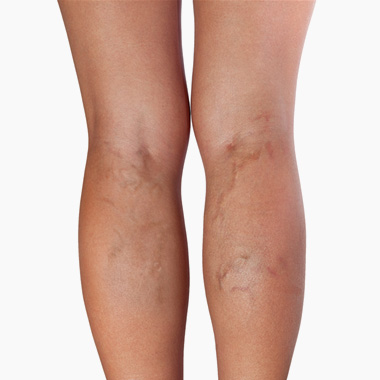
Even when symptoms seem similar, not all varicose veins are the same.
Specialized Treatment for Every Type of Varicose Vein

Develop from standing or sitting in one position for long periods.
Postural Varicose Veins

Postural varicose veins develop when weakened leg vein function results from standing or sitting for long periods due to occupational or lifestyle habits.

Varicose veins occur when the valves inside the leg veins do not function properly, preventing blood from flowing upward toward the heart and causing it to flow backward instead. To return blood from the legs to the heart, two elements are essential: the valves that block backward flow, and the calf muscles that help push blood upward. Postural varicose veins develop when weakened leg vein function results from standing or sitting for long periods due to occupational or lifestyle habits. When a person stands or sits for long periods because of their work, the veins in the legs remain under constant pressure, making it difficult for them to function normally.
As a result, the ability to return blood to the heart decreases, increasing the likelihood of developing varicose veins. People who must stand for long hours, such as those working in retail, service, education, or healthcare, and those who must sit for extended periods, such as drivers or office workers, are especially prone to postural varicose veins.

CAUSE OF DISEASE

Cause of Disease

The cause of postural varicose veins is prolonged standing of the calf veins.

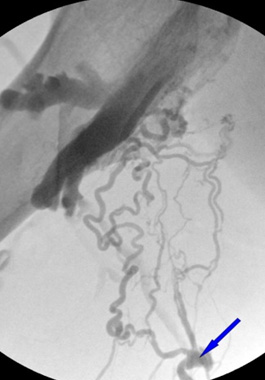
Standing or sitting for long periods is the main cause of varicose veins. The longer the calves remain upright, the more they are affected by gravity, which makes it easy for blood to pool in the legs. As the strength of the calf muscles decreases and the activity of the venous valves is reduced, their function declines.
As a result, the ability to return blood from the legs to the heart weakens, leading to the development of varicose veins.
  • Prolonged standing of the calf veins

  • Increased gravitational pressure on the leg veins, decreased valve function inside the veins

  • Development of postural varicose veins

SYMPTOM

Symptoms

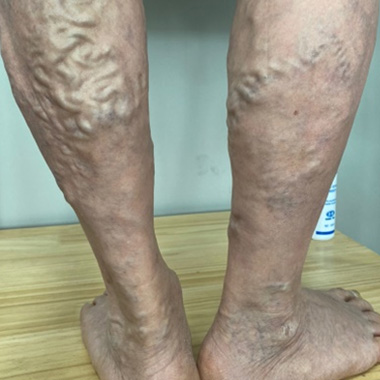
Postural varicose veins commonly cause leg swelling, bulging veins, leg pain, and numbness in the legs. Leg swelling occurs when blood stagnates, making the legs feel heavy and appear puffy. Bulging veins appear as the veins expand and become visible on the surface of the skin, sometimes resembling fine spider-like lines.
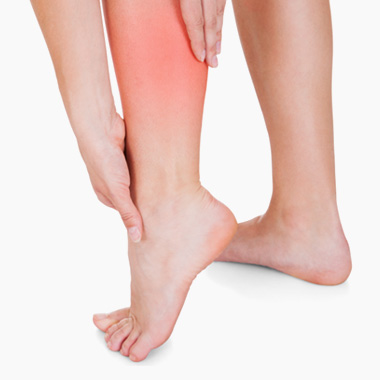
When the condition worsens, the enlarged veins may protrude noticeably above the skin. Pain is felt as a pulling or aching sensation in the calves or behind the knees caused by varicose veins. Numbness refers to a tingling or dull sensation in the calves while at rest. During sleep, this may cause frequent cramping in the calves that wakes the patient from sleep.

FEATURE

Characteristics of Postural Varicose Veins

Postural varicose veins are easy to overlook, so if they are suspected, prompt treatment is necessary.

Postural varicose veins are often missed in the early stages.
Many people assume leg swelling and heaviness are normal symptoms caused by standing or sitting for long periods, but they may actually be signs of varicose veins. Research has shown that people who stand for more than four hours a day are at greater risk of developing varicose veins. The risk is about three times higher in women and eight times higher in men compared with those who do not stand for long hours. People who stand or sit for extended periods and experience leg discomfort should consider the possibility of varicose veins.

CHECK

Check Yourself for Postural Varicose Veins

  • My legs feel numb after standing for a long time.
  • My legs feel heavy after sitting for a long time.
  • When I stand or sit for a long time, my legs quickly start to feel numb.
  • I can see bulging veins on my legs.
  • By evening, my legs are swollen and puffy.
  • I worry that my legs might hurt while I am sleeping.
  • I am concerned that leg pain and numbness might interfere with my work.
CAUTION

Precautions for Postural Varicose Veins

Postural varicose veins require a different approach when it comes to treatment.

Not all varicose veins are the same. Postural varicose veins must be evaluated with the patient’s daily lifestyle in mind. Because this type of varicose vein tends to recur easily, patients who must continue standing or sitting for long periods after treatment should take special care. For this reason, treatment should focus not only on relieving symptoms but also on helping patients maintain a comfortable daily life without recurrence. At Sun Vascular Clinic, complete recovery is always the top priority, which is why it provides fundamental and comprehensive treatment for postural varicose veins to achieve lasting results.

EFFECT

Treatment Results for Postural Varicose Veins

Postural varicose veins are closely related to each patient’s occupational characteristics. A systematic treatment plan is necessary to ensure that patients can continue their work comfortably after treatment. At Sun Vascular Clinic, treatment is carefully designed with consideration for the patient’s daily life after recovery. The clinic always puts patients first and helps them regain a confident and worry-free daily life after treatment..

TREATMENT

Stage-Based Treatment for Varicose Veins

Stage Early Stage Mid Stage Late Stage
Characteristics Light purple spider veins, small veins less than 1 mm becoming visible, and changes in skin tone Beginning of vein protrusion Veins larger than 1 mm bulging, twisting, or darkening, pigmentation, and thrombosis
Symptoms Heaviness, easy fatigue, mild swelling Tingling or swelling that worsens in the afternoon, leg cramps during sleep, cold sensations, burning in the soles of the feet Itching or crawling sensations, various and complex symptoms, worsening of existing symptoms, skin ulcers
Treatment Methods Medication, compression stockings, sclerotherapy VenaSeal (Horizontal Valve Sealing), Water Tunnel Laser, Mild Radiofrequency Treatment, ClariVein VenaSeal (Horizontal Valve Sealing), Water Tunnel Laser, Mild Radiofrequency Treatment, ClariVein

* Symptoms may vary and may appear in a mix of early, mid, and late stages depending on the progression of the disease.

Medication / Injection Treatment
Medication Treatment
This treatment is performed when varicose veins are detected at an early stage. It is used to prevent the progression of varicose veins or to relieve symptoms.
Sclerotherapy
This procedure involves injecting medication into the vein to close off the affected vessel. It is a simple treatment suitable for patients whose symptoms are not severe.
Procedures / Surgeries
VenaSeal
(Horizontal Valve Sealing)
VenaSeal is a treatment that injects medical adhesive into the vein to improve symptoms of varicose veins.
In cases of saphenous vein reflux, the junction between the saphenous vein and the deep vein is sealed horizontally and closely to form an angle near zero degrees, preventing recurrence.
Water Tunnel Laser
This treatment closes the vein using high-energy heat of 500-1000°C generated by the laser. It uses a diffused laser for safety, and the surrounding tissue is protected by a water tunnel that minimizes heat damage. The latest 1940 nm laser achieves an excellent closure rate with less thermal energy compared to older models, providing a safer treatment option.
ClariVein
This method uses a rotating-blade catheter to mechanically stimulate the inner wall of the vein, followed by an injection of a sclerosing agent. There is no heat damage or heat-related side effect.
Mild Radiofrequency Treatment
This procedure closes refluxing veins using heat energy of 100-120°C generated at the tip of a radiofrequency catheter. Like the laser method, it applies the water tunnel technique to maximize safety.
Vein Stripping Surgery
This traditional method is performed under local or general anesthesia. It involves making a small incision in the skin, tying off the refluxing vein, and removing it from the body. It may also be performed in combination with laser treatment.
TOP