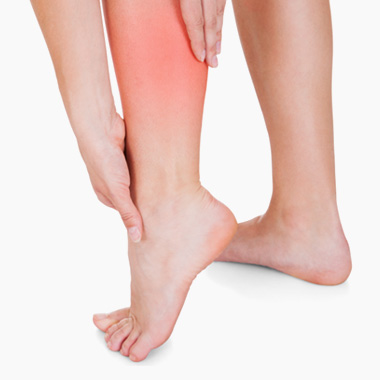
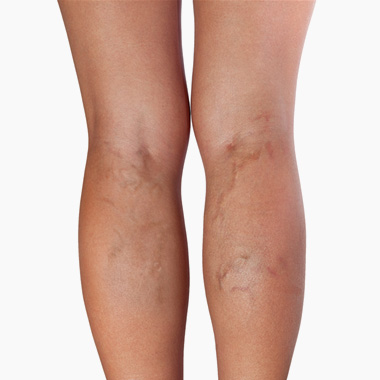
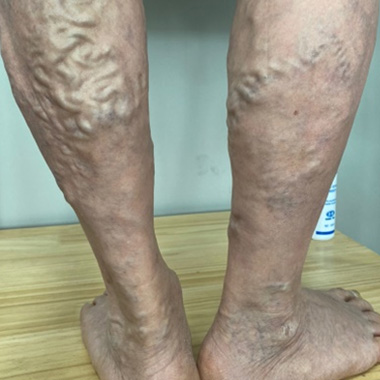
Even when symptoms seem similar, not all varicose veins are the same.
Specialized Treatment for Every Type of Varicose Vein

Varicose veins that develop due to weak vein walls present from birth.
Hereditary Varicose Veins

Hereditary varicose veins refer to varicose veins that develop due to congenital weakness in vein function caused by genetic factors.

The venous valves play an essential role in preventing blood from flowing backward. In particular, the valves in the leg veins are crucial in maintaining proper blood flow by preventing blood from being pulled downward by gravity. However, when these valves become weakened, blood begins to flow backward, leading to the development of varicose veins. Hereditary varicose veins are not caused by external factors that damage the valves but rather by an inherent weakness in the valves that allows blood to reflux. Because genetic factors are often involved, even minor strain on the veins can easily lead to valve failure.

CAUSE OF DISEASE

Cause of Disease

Just as children resemble their parents, veins can also take after the veins of their parents.

Varicose veins are often thought to develop simply from standing or sitting for long periods.
However, there are many different causes of varicose veins. These causes can be divided into congenital and acquired factors.
Acquired causes include lifestyle habits, level of physical activity, and aging, while congenital causes involve heredity, or family history. It is often said that children are a mirror image of their parents, sharing similar appearances and characteristics - and veins are no exception. If the parents have weak veins, their children are also likely to have weak veins. When people think of heredity, they often assume it refers only to the structure or traits of the veins. In reality, lifestyle and eating habits are also commonly inherited within families. If a person is born with weak vein walls or faulty valves and also leads a lifestyle lacking exercise or high in salty foods, the risk of developing varicose veins becomes even higher.
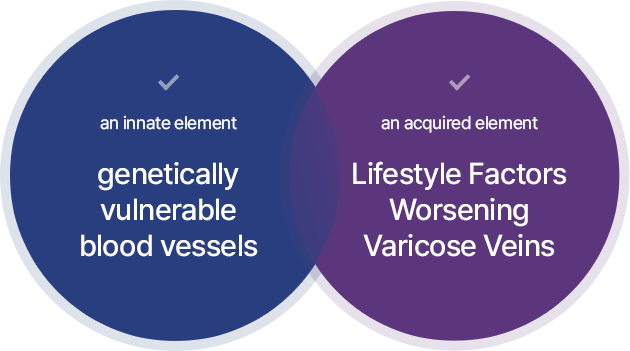
  • Congenitally weak veins caused by heredity

  • Excessive pressure on the legs

  • Development of hereditary varicose veins

SYMPTOM

Symptoms

Hereditary varicose veins commonly cause leg pain, numbness, and swelling.
Since abnormal valves prevent smooth blood flow, discomfort may occasionally appear in areas other than the legs.
Symptoms of varicose veins may also occur in unrelated areas such as the hips, soles of the feet, or lower back.

FEATURE

Characteristics of Hereditary Varicose Veins

Hereditary varicose veins should not be taken lightly.
Here is why they can be dangerous.
01

The risk of developing varicose veins is naturally higher than in the general population

[Risk of Varicose Veins in Children]
  • If one parent has varicose veins

    Son25% chance

    Daughter62% chance

  • If both parentshave varicose veins

    Son or daughter more than90% chance

People with hereditary varicose veins have inherently weaker valves and vein walls compared to those with healthy veins.
Because of these structural differences, they are more likely to develop varicose veins even under the same conditions as others.
Even a small amount of pressure on the legs can become a significant burden, so careful daily management is essential.

02

It can develop even at a young age

Ordinary varicose veins are known to occur mainly in older adults. However, hereditary varicose veins can appear regardless of age. This is because weak veins are more prone to valve failure, even under normal levels of strain. As a result, many patients with hereditary varicose veins are surprisingly young.

Young individuals who are busy with school or work often delay treatment even after being diagnosed with varicose veins caused by family history. They tend to think, “It will be fine if I treat it later,” and rely only on temporary medication. This delay allows early-stage varicose veins to progress into more severe disease. As the condition worsens, treatment options become limited and more burdensome. Thus, hereditary varicose veins should be treated as early as possible. It is important to remember that this condition can occur even at a young age.

03

It involves not only vascular characteristics but also lifestyle habits.

Because family members live together, as then often share similar lifestyles and eating habits. If the family environment makes it easier for varicose veins to develop, the risk of occurrence among family members also increases. For example, if the household tends to eat salty foods, exercise less, and gain weight easily, the added body weight places more pressure on the legs, and reduced muscle mass can slow blood circulation. This leads to weakened valves and longer periods of blood pooling in the legs. Therefore, hereditary varicose veins must be understood in relation not only to congenital vascular traits but also to the family’s overall living environment.

04

All veins are weakened.

When we say that veins are weak in hereditary varicose veins, it does not refer to a single vessel. Just as sensitive skin affects all areas of the body, fragile veins can occur throughout the entire vascular system without distinction. For this reason, hereditary varicose veins may appear not only in the small and great saphenous veins but also in smaller, unnamed veins. In some cases, multiple veins may develop problems simultaneously, leading to the onset of varicose veins, which is why careful management is essential.

CAUTION

Precautions for Hereditary Varicose Veins

Hereditary varicose veins are a warning message passed down through generations.

Unlike varicose veins caused by external factors, hereditary varicose veins can be anticipated and managed in advance by understanding the family’s medical history. However, because symptoms can appear not only in the legs but also in other areas of the body, it is often difficult for patients to recognize the condition on their own. If diagnosis and treatment are delayed, the symptoms in the legs can worsen, limiting treatment options and leading to more burdensome procedures. At Sun Vascular Clinic, we help prevent this by examining the vein health of family members in advance, allowing timely treatment of hereditary varicose veins.

EFFECT

Treatment Results for Hereditary Varicose Veins

Hereditary varicose veins represent a chain of disease passed from parents to their children. To break this cycle, both patients who already have the condition and family members who have not yet developed it must undergo systematic examination and treatment. For patients already affected, we conduct a thorough evaluation to identify every problematic vein and apply the most suitable treatment to each one, achieving effective results with the least invasive approach. For those who have not yet developed varicose veins, we offer regular checkups to relieve anxiety and prevent future occurrence. At Sun Vascular Clinic, we not only treat hereditary varicose veins but also strive to help families maintain lifelong vascular health and well-being.

TREATMENT

Stage-Based Treatment for Varicose Veins

Stage Early Stage Mid Stage Late Stage
Characteristics Light purple spider veins, small veins less than 1 mm becoming visible, and changes in skin tone Beginning of vein protrusion Veins larger than 1 mm bulging, twisting, or darkening, pigmentation, and thrombosis
Symptoms Heaviness, easy fatigue, mild swelling Tingling or swelling that worsens in the afternoon, leg cramps during sleep, cold sensations, burning in the soles of the feet Itching or crawling sensations, various and complex symptoms, worsening of existing symptoms, skin ulcers
Treatment Methods Medication, compression stockings, sclerotherapy VenaSeal (Horizontal Valve Sealing), Water Tunnel Laser, Mild Radiofrequency Treatment, ClariVein VenaSeal (Horizontal Valve Sealing), Water Tunnel Laser, Mild Radiofrequency Treatment, ClariVein

* Symptoms may vary and may appear in a mix of early, mid, and late stages depending on the progression of the disease.

Medication / Injection Treatment
Medication Treatment
This treatment is performed when varicose veins are detected at an early stage. It is used to prevent the progression of varicose veins or to relieve symptoms.
Sclerotherapy
This procedure involves injecting medication into the vein to close off the affected vessel. It is a simple treatment suitable for patients whose symptoms are not severe.
Procedures / Surgeries
VenaSeal
(Horizontal Valve Sealing)
VenaSeal is a treatment that injects medical adhesive into the vein to improve symptoms of varicose veins.
In cases of saphenous vein reflux, the junction between the saphenous vein and the deep vein is sealed horizontally and closely to form an angle near zero degrees, preventing recurrence.
Water Tunnel Laser
This treatment closes the vein using high-energy heat of 500-1000°C generated by the laser. It uses a diffused laser for safety, and the surrounding tissue is protected by a water tunnel that minimizes heat damage. The latest 1940 nm laser achieves an excellent closure rate with less thermal energy compared to older models, providing a safer treatment option.
ClariVein
This method uses a rotating-blade catheter to mechanically stimulate the inner wall of the vein, followed by an injection of a sclerosing agent. There is no heat damage or heat-related side effect.
Mild Radiofrequency Treatment
This procedure closes refluxing veins using heat energy of 100-120°C generated at the tip of a radiofrequency catheter. Like the laser method, it applies the water tunnel technique to maximize safety.
Vein Stripping Surgery
This traditional method is performed under local or general anesthesia. It involves making a small incision in the skin, tying off the refluxing vein, and removing it from the body. It may also be performed in combination with laser treatment.
TOP