Advanced Expertise for Treating Even the Most Complex Varicose Veins
Vascular Treatment Technology

Sun Vascular Clinic provides third-generation, non-thermal technology for advanced treatment of varicose veins
ClariVein / Flebogrif(New Medical Technology)

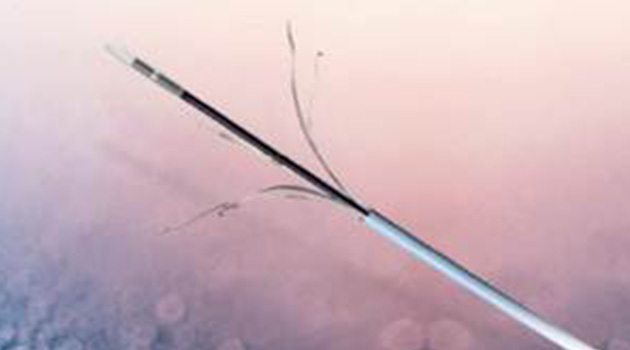
ClariVein uses a rotating-blade catheter to mechanically stimulate the inner wall of the vein before injecting a sclerosing agent, whereas Flebogrif uses five multidirectional blades that deliver both the sclerosing agent and mechanical stimulation at the same time.

TECHNIQUE

What Is ClariVein?

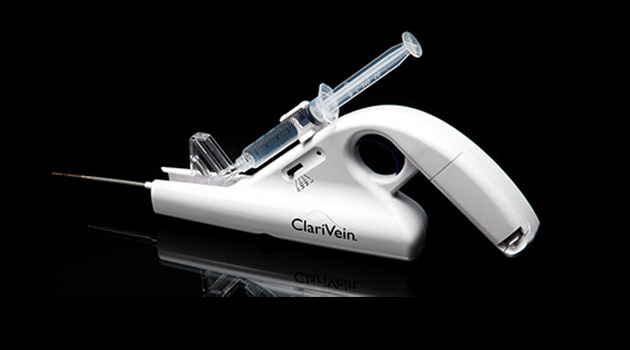
ClariVein is a third-generation treatments for varicose veins. It combines mechanical and chemical vein closure methods. (MOCA: Mechanico-Chemical Ablation) ClariVein uses a special rotating catheter to mechanically stimulate the vein while simultaneously injecting a chemical sclerosing agent to close it.

Unlike traditional laser or radiofrequency treatments, ClariVein offers the advantage of effective treatment without thermal injury, similar to the VenaSeal method. It can also be applied to larger veins such as the saphenous veins, which are not typically treated with standard sclerotherapy injections.
SEQUENCE

ClariVein Treatment Procedure

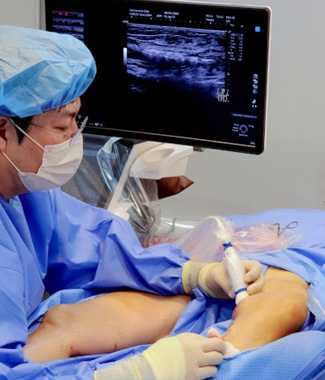
  1. Insert a catheter under ultrasound guidance

    The ClariVein procedure begins with the insertion of a special catheter into the vein under ultrasound guidance. The catheter is very thin and flexible, and a rotating wire is attached to its tip.

  2. Confirm catheter position

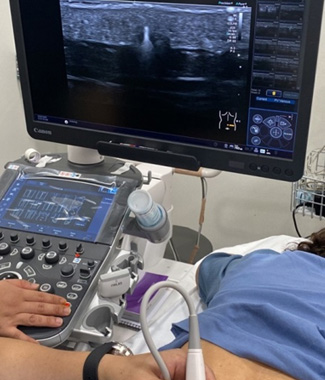
    Using a high-resolution, high-penetration ultrasound device, the doctor confirms that the catheter is positioned correctly within the target vein.

  3. Activate mechanical stimulation

    Once the catheter is in the proper position, the rotating wire at the tip is activated. This wire rotates thousands of times per second and mechanically stimulates the inner wall of the vein.

  4. Inject the chemical sclerosing agent

    While the rotating wire stimulates the vein, a chemical sclerosing agent is injected into the vein through the same catheter. The sclerosing agent causes a chemical reaction on the vein wall, closing the vein.

  5. Complete the procedure and apply compression

    After the procedure is completed, the treated vein is checked once more and the catheter is removed. A compression bandage is temporarily applied to the treatment area. Compression helps maintain vein closure and reduces swelling and bleeding.

  • Non-Thermal Treatment Technology

    Unlike laser or radiofrequency treatments, this method avoids heat, which helps minimize the pulling or tight sensation after treatment. Because no heat is applied, the risk of tissue damage and side effects around the vein is greatly reduced.

  • Minimally Invasive Procedure

    The catheter is inserted through a tiny needle puncture, which leaves almost no scarring.

  • Fast Recovery

    There is little pain or swelling after the procedure, allowing for a quick recovery.

  • Simple and Convenient Treatment

    The procedure takes only 10 to 15 minutes per vein. It is performed under local anesthesia, so general anesthesia is not required.

TECHNIQUE

What Is Flebogrif?

Flebogrif is one of the most recently introduced treatments for venous insufficiency and varicose veins. (ClariVein was introduced in 2018, and Flebogrif was introduced in Korea in 2023.) Like VenaSeal, it is a third-generation NTNT (Non-Thermal, Non-Tumescent) treatment method. It is also classified as MOCA (Mechanico-Chemical Ablation), similar to ClariVein."

Flebogrif treats refluxing veins by mechanically and physically stimulating the inner wall of the vein, followed by the injection of a sclerosing agent. It can be applied to larger veins, such as the saphenous veins. Compared to conventional thermal treatments, it carries a much lower risk of heat-related side effects. Instead of a rotating wire, Flebogrif uses multiple small blades, but its basic principle and indications are the same as those of ClariVein."

TREATMENT

ClariVein Treatment Process

  1. Insert a catheter under ultrasound guidance

    Under high-resolution ultrasound guidance, a Flebogrif catheter is inserted through an 18G needle puncture to reach the starting point of the target vein.

  2. Confirm catheter position

    Check again to ensure that the catheter is correctly positioned within the refluxing vein.

  3. Close the vein through mechanico-chemical ablation

    While monitoring in real time with ultrasound, the Flebogrif catheter moves through the vein, mechanically stimulating the inner wall while simultaneously injecting a sclerosing agent to close the vein.

  4. Complete the procedure and apply compression

    After all vein treatment is completed, remove the catheter and apply a compression bandage. Compression helps reduce swelling and bleeding and supports recovery of the surrounding healthy veins.

  • Third-Generation Non-Thermal Treatment

    Flebogrif uses a third-generation treatment method called non-thermal therapy (NTNT) for varicose veins. It closes the vein by stimulating and slightly damaging the vein wall without using heat.

  • Minimally Invasive Treatment with Minimal Damage

    This is a minimally invasive procedure that inserts the catheter through an 18G needle puncture, leaving very little tissue damage.

  • Quick Return to Daily Life

    Since no heat is used, there is less pain, pulling, and swelling after the procedure, allowing for a faster recovery.

  • Ensured Safety

    Because heat is not used, the risk of damage to surrounding tissues is low. As a result, the chance of complications is also significantly reduced.

DIFFERENCE

Differences Between ClariVein and Flebogrif

ClariVein and Flebogrif are the most recently introduced treatment methods for venous insufficiency and varicose veins. (ClariVein was introduced in 2018, and Flebogrif was introduced in Korea in 2023.))

Like VenaSeal, ClariVein is a third-generation NTNT (Non-Thermal, Non-Tumescent) treatment method and is classified as MOCA (Mechanico-Chemical Ablation). Flebogrif treats refluxing veins by mechanically and physically stimulating the inner wall of the vein, followed by the injection of a sclerosing agent. It can be applied to larger veins, such as the saphenous veins.

"Compared to conventional thermal treatments, it carries a much lower risk of heat-related side effects. Instead of a rotating wire, Flebogrif uses multiple small blades, but its basic principle and indications are the same as those of ClariVein. Both share the same MOCA (Mechanico-Chemical Ablation) mechanism, but they differ in how the catheter tip operates - ClariVein uses a rotating motion, while Flebogrif uses a five-blade expansion system inside the vein.

Sort ClariVein Flebogrif
Treatment principle Uses a special rotating catheter that mechanically stimulates the inside of the vein while simultaneously injecting a sclerosing agent to chemically close the vein. Uses a five-blade catheter to mechanically stimulate the inner wall of the vein, followed by the injection of a sclerosing agent to chemically close the vein.
Treatment method Mechanico-chemical ablation (MOCA) Mechanico-chemical ablation (MOCA)
Characteristics Causes very little pain and is safe enough to perform under local or mild sedation. Causes very little pain and is safe enough to perform under local or mild sedation.
Recovery speed Since it does not use high thermal energy, there is little pain or swelling, allowing for a fast recovery. (NTNT) Since it does not use high thermal energy, there is little pain or swelling, allowing for a fast recovery. (NTNT)
Possible side effects Some patients may find the noise and vibration of the rotating wire slightly uncomfortable. Because the catheter’s blades gently scrape the inner wall of the vein, some patients may feel a mild pulling sensation during the procedure.
FEATURE

ClariVein / Flebogrif Features

  • 01

    Sun Vascular Clinic provides third-generation, non-thermal technology for advanced treatment of varicose veins.

  • 02

    Each procedure is performed with high-resolution ultrasound guidance for precise and accurate treatment.

  • 03

    The method ensures safety with minimal risk of damage to surrounding tissues.

  • 04

    Even small and hard-to-detect branch veins are carefully treated with meticulous precision.

TOP